Question 1
1. From this chart you can see a decrease in immigration to the U.S from the years 2001 to 2003. The reason for the sudden decrease is because of the terrorist attack that occured in the U.S, called 9/11 in 2001. This attack on the Twin Towers stunned the world because security was threatened in the U.S making it less likely for immigrants to want to migrate and live there.
2. Statistics can give us an insight to historical events because different decreases and increases are big clues to what is going on. In this chart the decrease in immigration to the U.S is huge, from 2001 to 2003 people are not migrating because of the terrorist attack on two of the U.S' most prized buildings, on September 11th 2001. Because of national security the amount of decrease in immigration is large because the U.S security was threatened.
Friday, January 21, 2011

Monday, January 10, 2011
Interview!
Grace Leung
1/3/11
Mr.Wojo
Honors Human Geography
Summer Chang Interview
Q. What part of Korea are you from?
A. “I am from South Korea.”
Q. What is your first language?
A. “My first language is Korean.”
Q. What nationality are your parents?
A. “Both of them are Korean.”
Q. Do you have any siblings? If so what are their first languages?
A. “I have one younger brother. He's first language is also Korean.”
Q. Do you know any other languages besides English and your first language?
A. “I can speak Chinese little bit... Korean is relate to Chinese characters basically, it's not that hard to learn rather than English. Like Spanish is easy to learn for English speakers.”
Q. Describe your home town to me.
A. “I’m from Seoul, which is capital city of Korea. It is a very big city, it is as big as New York City!”
Q. What is your favorite memory from your childhood, in your home town?
A. “I don’t have any typical thing, but I was with my family although I’m staying here alone now.”
Q. What was it like to learn English? Was it difficult or easy?
A.“It’s not that easy. Cause English is not my first language…
When I was in Korea, English was the hardest subject, and I didn’t like English, even. But I gain confidence for English from learning here.”
Q. Describe the school you went to, to learn English.
A. “Usually most of Korean students are learning English since when they go to Kindergarten. Korean students are eager to learn English, thus they get some tutoring from the teacher for English. And I also got tutoring when I was in Korea, that’s the general thing in Korea, to learn English.”
Q. Were the schools more difficult or different in Korea than they are in the U.S? If so what are the differences?
A.“The schools in here are very different from Korea. Firstly, I should use English in here instead of Korean. We don’t have counselor or advisory things in Korea, and also we have typical schedule that we should follow. It means we don’t have any chance to choose class that we want to take, or drop that we don’t want to take. Lastly, Korean high schools usually end between 4 to 5 o’clock, and they have kind of study hours right after school through 10 o’ clock.”
Q. What are some sports or hobbies you had in Korea that you might have not have here?
A. “We don’t play sports in high schools in Korea. When we go to high school, then we just stay focused on only on academic things for college. But some schools have soccer team or basketball team.”
Q. Describe your favorite type of music from Korea? And Artist?
A. “I like most of K-pops. I was very surprised when someone here asked me k-pops, and she even knows Korean singers, and also she said her dream is visit Korea and watch Super Junior’s concert which is famous singer group in Korea.”
Q. What is your favorite subject in school right now? Did the teachers in Korea teach differently?
“My favorite subject is math. The way of teaching in Korea is very different from here. We are usually just focused on the result of the problem but not how to solve the problem. But in here, the teachers give us some minutes to think how to solve the problem. That's very different way to what I'm used to do in Korea, and I like that way.”
Q. Do you have the same type of technology in Korea?
A. “if you mean overall technology in Korea, it's very well developed. For example, most people in here using cell phone from Samsung or LG. Actually, they are Korean company. And Hyundai or Kia are also Korean company.”
Q. How many times a year do, you visit your family?
A. “ I usually going back to Korea during summer time and Christmas. I just came back from Korea last Sunday and I still jet lagged.”
Q. What are some celebrations that occur in Korea that we might not have here? Are there any cultural differences?
“We have some our traditional celebrations like Thanks giving day in Korea.
It's kind of Thanks giving day in Korea, called Chu-Suk. We don't have school about 3days around Chu-Suk. Most of people are visit their hometown, all of family members gather together and hold a memorial service for their ancestors. We eat a lot of foods during Chu-Suk like you guys eat many foods during Thanks giving day.”
Wednesday, January 5, 2011
French Exchange Student Essay
Grace Leung
1/4/11
France Reflection


Tuesday, January 4, 2011
China and the United States
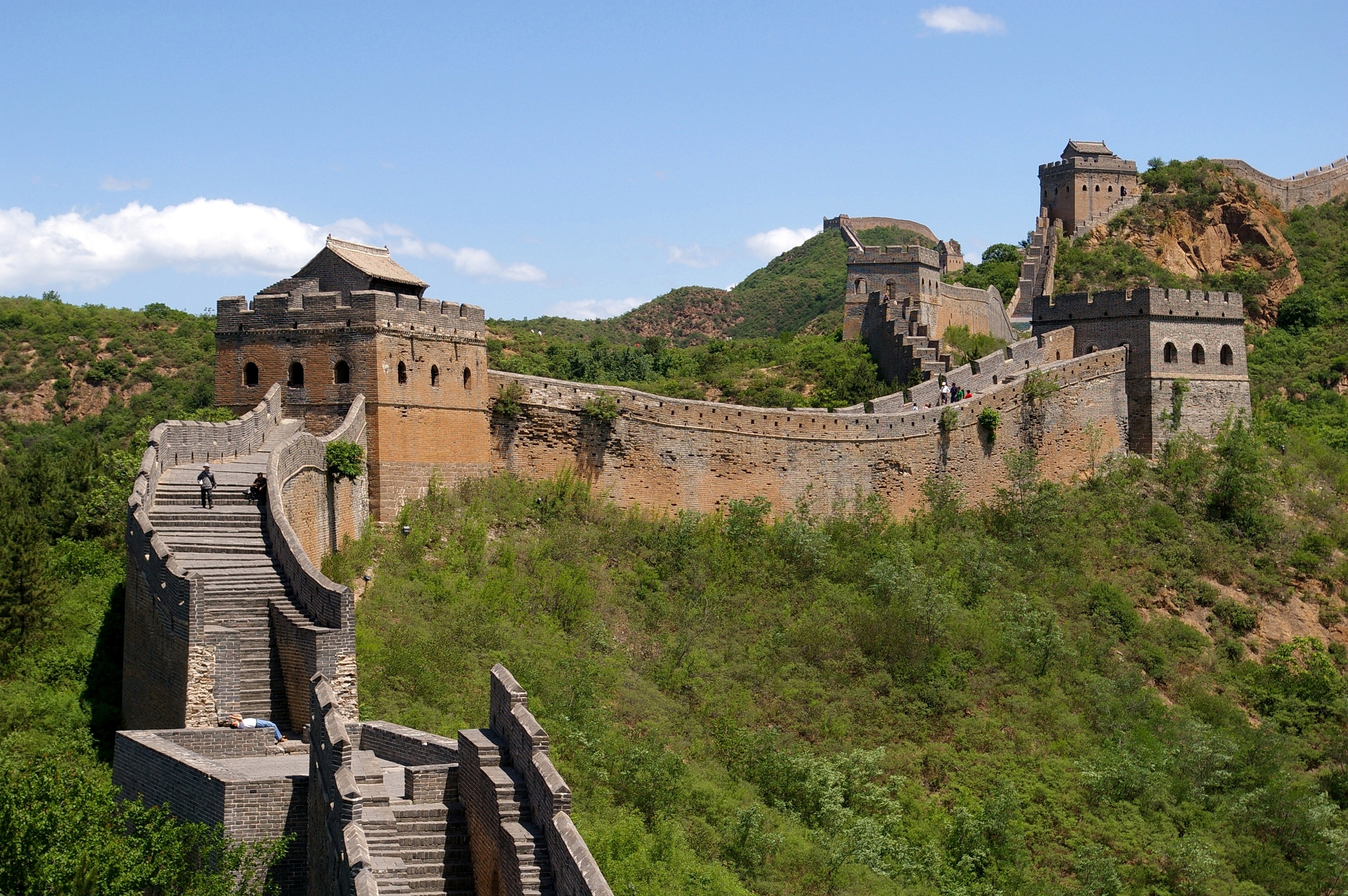
China and the United States have many differences in population to other differences. China’s population is of 1,330,141,295 and is the largest country in the world, while the United States population is 310,232,863 making it third in the world. Also the United States median age is 36 years, making it a year more than China’s median age. China is also a communist country, while the United States government is a federal public, giving its people more rights. The capital of the U.S is Washington D.C and the capital of China is Beijing. The rates, for AID’s is larger in the U.S, as it is 1.2 million, while China’s number of people with AID’s is 700,000. Despite China having the larger population, the U.S’ AID’s rate is higher. These are just some of the many differences between the Unites States and China.
Works Cited
"CIA - The World Factbook." Welcome to the CIA Web Site — Central Intelligence Agency. 2011. Web. 04 Jan. 2011. https://www.cia.gov/library/publications/the-world-factbook/geos/us.html#top.
"CIA - The World Factbook." Welcome to the CIA Web Site — Central Intelligence Agency. 2011. Web. 04 Jan. 2011. https://www.cia.gov/library/publications/the-world-factbook/geos/ch.html.
"File:TheWhiteHouse.jpg." Wikimedia Commons. Web. 04 Jan. 2011. http://commons.wikimedia.org/wiki/File:TheWhiteHouse.jpg.

"File:Flag of the United States.svg." Wikimedia Commons. Web. 04 Jan. 2011. http://commons.wikimedia.org/wiki/File:Flag_of_the_United_States.svg.

"File:Hall of Prayer for Good Harvest.JPG." Wikimedia Commons. Web. 04 Jan. 2011. http://commons.wikimedia.org/wiki/File:Hall_of_Prayer_for_Good_Harvest.JPG.

"File:20090529 Great Wall 8185.jpg." Wikimedia Commons. Web. 04 Jan. 2011. http://commons.wikimedia.org/wiki/File:20090529_Great_Wall_8185.jpg.

"File:Flag of the People's Republic of China.svg." Wikimedia Commons. Web. 04 Jan. 2011. http://commons.wikimedia.org/wiki/File:Flag_of_the_People's_Republic_of_China.svg.




Monday, December 13, 2010
My Group Project
People in Group:
Emily Cassidy
Emily Patrick
Katherine Flaningan
Quinn Collins
Amanda Reid
Part of Project : California
Emily Cassidy
Emily Patrick
Katherine Flaningan
Quinn Collins
Amanda Reid
Part of Project : California
Tuesday, December 7, 2010
Apartheid Essay Redo
Grace Leung
11/19/10
Human Geography
Apartheid in South Africa came to an end in 1994 with the inauguration of Nelson Mandela, a black native African. Although blacks were a majority in South Africa, Apartheid gave power to the minority whites so they could rule over the black majority. Apartheid is defined as a social policy or racial segregation involving political, economic and legal discrimination against people who are not white (http://dictionary.reference.com, 2010). The South African government enforced the racial code or Apartheid in 1948. The law put down all nonwhite citizens and forced them to move sometimes by force to segregated areas to live. In 1958, blacks were denied citizenship under Apartheid. Since the majority of the population of voting citizens in South Africa were white, a clear majority consistently voted for Apartheid candidates. All resources such as education, medical care, and public services were segregated with blacks receiving inferior services to whites (http://en.wikipedia.org/wiki/South_Africa_under_apartheid, 2010 ). Apartheid lasted as long as it did because whites remained in positions of authority and blacks were suppressed until the election of Mandela.
The only citizens of South Africa who benefited from Apartheid were the white citizens because it enabled them to remain in positions of authority and power. The separation of whites and blacks under Apartheid meant that resources would also be separated. Because the whites had more resources such as jobs, property and education, they continued to prosper while blacks were unsuccessful. The black minority did not have the economic resources to survive on their own. They were discriminated against for jobs and soon found themselves dependent on the whites for survival. The overall goal of the authors and proponents of Apartheid was to keep the white minority in control.
The outrage at the unjust laws of Apartheid eventually led to its demise and the election of Mandela in 1994. Many artists came to support the end of Apartheid after guitarist Steven Van Zandt used an African town called Sun City as the center of his activist movement. Zandt had visited the city in the 1980s while looking for ideas for his music. He was so disgusted that he chose to write about the city in a song. Forty-nine popular artists also agreed not to play in the casino and entertainment town in South Africa (http://en.wikipedia.org/wiki/Artists_United_Against_Apartheid, 2010). Movements like these continued to grow, and ultimately helped to bring about the end of Apartheid in South Africa which culminated with the election of Mandela. As a black movement leader who was imprisoned for 27 years because he spoke out against Apartheid, it is ironic and just that he would be elected to end Apartheid only four years after his release from prison. Mandela never gave up on his belief of peace in South Africa during all his years in prison. Although Mandela only served one term as president, he continues to work with foundations established in his name. Mandela’s impact on the end of Apartheid is honored with a national holiday on the date of his election because of the importance of the freedom rights that were gained (http://en.wikipedia.org/wiki/Truth_and_Reconciliation_Commission_(South Africa), 2010).
The “Truth Commission” and African National Congress, ANC, were established to ensure that Apartheid remains banned from South Africa. The “Truth Commission” convicted those who enforced or were involved in the Apartheid. This also helps to prevent those that could cause more uproar against the new government that seeks to install democracy (http://en.wikipedia.org/wiki/Truth_and_Reconciliation_Commission_(South_Africa),2010). Although started in the 1950’s, the ANC became stronger once Apartheid was ended. The original small group lead by several African leaders sought to abolish Apartheid, and now the worldwide organization acts as a watchdog group that fights against racism and unfair treatment of races(http://www.anc.org.za/show.php?include=docs/misc/2010/anc.html,2010). With Apartheid gone, South Africa moves closer to democracy for all.
The four decades of Apartheid will be felt in South Africa for many years to come after Mandela’s diplomatic rule. The country’s demographics still reflect the majority being black, 79%, with a minority of white, 8%, coloured, 8%, and asian , 2%. The poverty of the country is reflected in the high HIV and AIDS victims, 5.7 million (http://en.wikipedia.org/wiki/Demographics_of_South_Africa, 2010). Apartheid ensured that a few ruled over a majority, and in the end, no one won because the country was stripped of pride and compassion for all. Resources were hoarded and too many suffered for decades. The lessons learned from Apartheid are difficult for the South Africans, but will hopefully prevent future abuse of its most vital resource- its people
Works Cited
"ANC Tabs." ANC Tabs. Unwembi, 2010. Web. 21 Nov. 2010. <http://www.anc.org.za/show.php?include=docs/misc/2010/anc.html>.
"Artists United Against Apartheid." Wikipedia, the Free Encyclopedia. 29 Sept. 2010. Web. 21 Nov. 2010. <http://en.wikipedia.org/wiki/Artists_United_Against_Apartheid>.
"CIA - The World Factbook." Welcome to the CIA Web Site — Central Intelligence Agency. CIA Factbook. Web. 21 Nov. 2010. <https://www.cia.gov/library/publications/the-world- factbook/geos/sf.html>.
Dictionary.com | Find the Meanings and Definitions of Words at Dictionary.com. 2010. Web. 21 Nov. 2010. <http://dictionary.reference.com/>.
"Demographics of South Africa." Wikipedia, the Free Encyclopedia. 19 Nov. 2010. Web. 21 Nov. 2010. <http://en.wikipedia.org/wiki/Demographics_of_South_Africa>.
"Truth and Reconciliation Commission (South Africa)." Wikipedia, the Free Encyclopedia. 19 Nov. 2010. Web. 21 Nov. 2010. <http://en.wikipedia.org/wiki/Truth_and_Reconciliation_Commission_(South_Africa)>.
Mandela, Nelson. Long Walk to Freedom: the Autobiography of Nelson Mandela. Boston: Little, Brown, 1994. Print.
Work, By Painstaking. "Nelson Mandela Foundation – Memory - Biography." Nelson Mandela Foundation – Home. Nelson Mandela Foundation, 2010. Web. 21 Nov. 2010. <http://www.nelsonmandela.org/index.php/memory/views/biography>.
1930s, By The. "South Africa under Apartheid." Wikipedia, the Free Encyclopedia. 21 Oct. 2010. Web. 21 Nov. 2010. <http://en.wikipedia.org/wiki/South_Africa_under_apartheid>.
Monday, November 22, 2010
Apartheid Essay
Grace Leung
11/19/10
Human Geography
Apartheid in South Africa came to an end in 1994 with the inauguration of Nelson Mandela, a black native African. Although blacks were a majority in South Africa, Apartheid gave power to the minority whites so they could rule over the black majority. Apartheid is defined as a social policy or racial segregation involving political, economic and legal discrimination against people who are not white (Dictionary…). The South African government enforced the racial code or Apartheid in 1948. The law put down all nonwhite citizens and forced them to move sometimes by force to segregated areas to live. In 1958, blacks were denied citizenship under Apartheid. Since the majority of the population of voting citizens in South Africa were white, a clear majority consistently voted for Apartheid candidates. All resources such as education, medical care, and public services were segregated with blacks receiving inferior services to whites(1930s…). Apartheid lasted as long as it did because whites remained in positions of authority and blacks were suppressed until the election of Mandela.
The only citizens of South Africa who benefited from Apartheid were the white citizens because it enabled them to remain in positions of authority and power. The separation of whites and blacks under Apartheid meant that resources would also be separated. Because the whites had more resources such as jobs, property and education, they continued to prosper while blacks were unsuccessful. The black minority did not have the economic resources to survive on their own. They were discriminated against for jobs and soon found themselves dependent on the whites for survival. The overall goal of the authors and proponents of Apartheid was to keep the white minority in control.
The outrage at the unjust laws of Apartheid eventually led to its demise and the election of Mandela in 1994. Many artists came to support the end of Apartheid after guitarist Steven Van Zandt used an African town called Sun City as the center of his activist movement. Zandt had visited the city in the 1980s while looking for ideas for his music. He was so disgusted that he chose to write about the city in a song. Forty-nine popular artists also agreed not to play in the casino and entertainment town in South Africa (Artists…). Movements like these continued to grow, and ultimately helped to bring about the end of Apartheid in South Africa which culminated with the election of Mandela. As a black movement leader who was imprisoned for 27 years because he spoke out against Apartheid, it is ironic and just that he would be elected to end Apartheid only four years after his release from prison. Mandela never gave up on his belief of peace in South Africa during all his years in prison. Although Mandela only served one term as president, he continues to work with foundations established in his name. Mandela’s impact on the end of Apartheid is honored with a national holiday on the date of his election because of the importance of the freedom rights that were gained (Mandela).
The “Truth Commission” and African National Congress, ANC, were established to ensure that Apartheid remains banned from South Africa. The “Truth Commission” convicted those who enforced or were involved in the Apartheid. This also helps to prevent those that could cause more uproar against the new government that seeks to install democracy (Truth…). Although started in the 1950’s, the ANC became stronger once Apartheid was ended. The original small group lead by several African leaders sought to abolish Apartheid, and now the worldwide organization acts as a watchdog group that fights against racism and unfair treatment of races(ANC…). With Apartheid gone, South Africa moves closer to democracy for all.
The four decades of Apartheid will be felt in South Africa for many years to come after Mandela’s diplomatic rule. The country’s demographics still reflect the majority being black, 79%, with a minority of white, 8%, coloured, 8%, and asian , 2%. The poverty of the country is reflected in the high HIV and AIDS victims, 5.7 million (Demographics). Apartheid ensured that a few ruled over a majority, and in the end, no one won because the country was stripped of pride and compassion for all. Resources were hoarded and too many suffered for decades. The lessons learned from Apartheid are difficult for the South Africans, but will hopefully prevent future abuse of its most vital resource- its people.
Works Cited
"ANC Tabs." ANC Tabs. Unwembi, 2010. Web. 21 Nov. 2010. <http://www.anc.org.za/show.php?include=docs/misc/2010/anc.html>.
"Artists United Against Apartheid." Wikipedia, the Free Encyclopedia. 29 Sept. 2010. Web. 21 Nov. 2010. <http://en.wikipedia.org/wiki/Artists_United_Against_Apartheid>.
"CIA - The World Factbook." Welcome to the CIA Web Site — Central Intelligence Agency. CIA Factbook. Web. 21 Nov. 2010. <https://www.cia.gov/library/publications/the-world- factbook/geos/sf.html>.
Dictionary.com | Find the Meanings and Definitions of Words at Dictionary.com. 2010. Web. 21 Nov. 2010. <http://dictionary.reference.com/>.
"Demographics of South Africa." Wikipedia, the Free Encyclopedia. 19 Nov. 2010. Web. 21 Nov. 2010. <http://en.wikipedia.org/wiki/Demographics_of_South_Africa>.
"Truth and Reconciliation Commission (South Africa)." Wikipedia, the Free Encyclopedia. 19 Nov. 2010. Web. 21 Nov. 2010. <http://en.wikipedia.org/wiki/Truth_and_Reconciliation_Commission_(South_Africa)>.
Mandela, Nelson. Long Walk to Freedom: the Autobiography of Nelson Mandela. Boston: Little, Brown, 1994. Print.
Work, By Painstaking. "Nelson Mandela Foundation – Memory - Biography." Nelson Mandela Foundation – Home. Nelson Mandela Foundation, 2010. Web. 21 Nov. 2010. <http://www.nelsonmandela.org/index.php/memory/views/biography>.
1930s, By The. "South Africa under Apartheid." Wikipedia, the Free Encyclopedia. 21 Oct. 2010. Web. 21 Nov. 2010. <http://en.wikipedia.org/wiki/South_Africa_under_apartheid>.
Subscribe to:
Posts (Atom)